
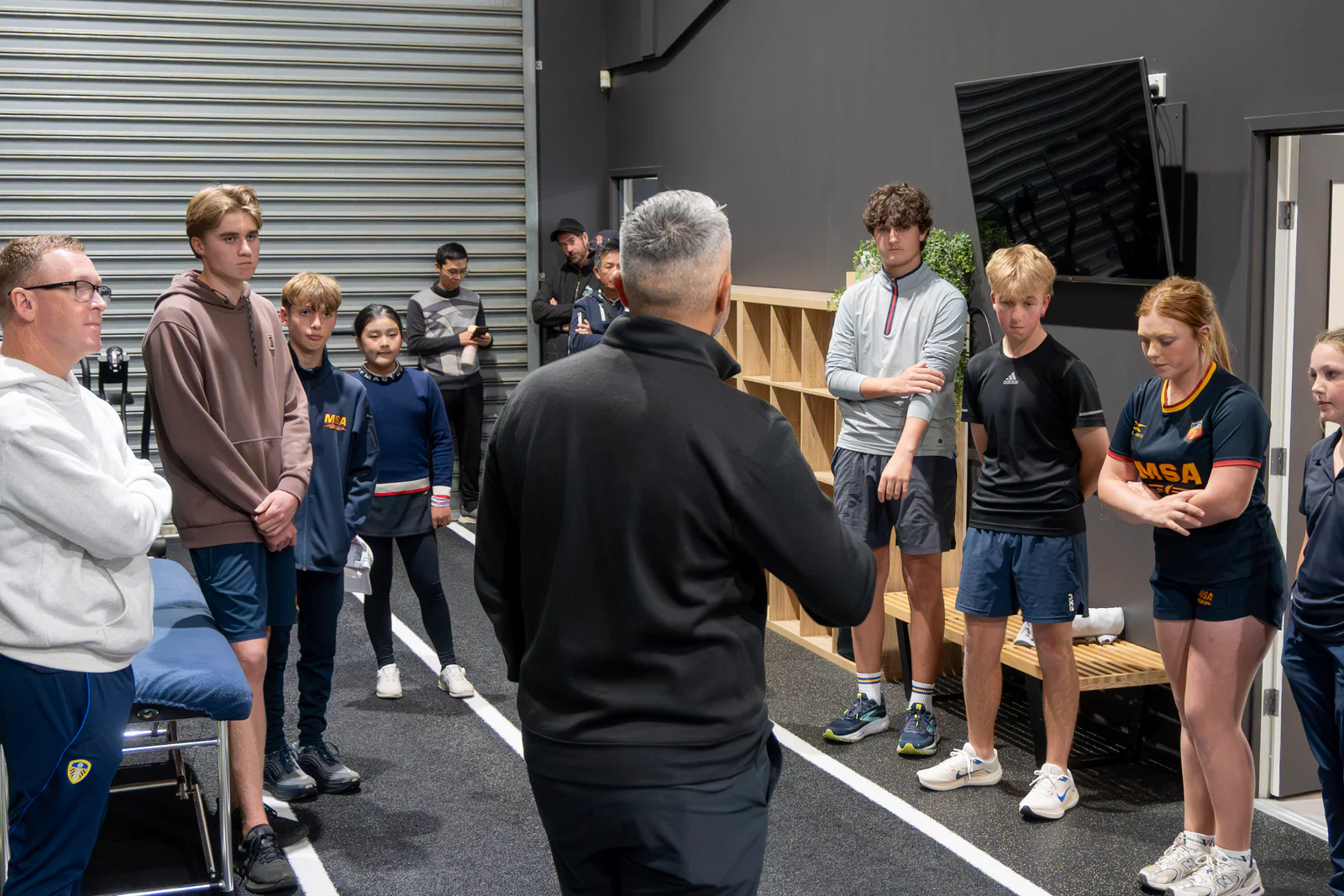
Committed junior golfers should not be criticised for wanting to improve. They should be supported with a body and a development plan capable of handling the work.
The pattern I am seeing
Many committed junior golfers are practising for one or two hours most afternoons, playing regularly and increasing their tournament schedule. The commitment is impressive. The concern is that their physical preparation does not always develop at the same rate as their golf volume.
In younger golfers - often around 10 to 13 years of age - I am increasingly seeing rounded posture, stiffness through the hips and upper back, recurring lower-back discomfort and minor knee or ankle complaints. These observations do not prove that golf practice caused each issue. They do justify a closer look at practice volume, growth, recovery, movement variety and physical capacity.
Golf practice is not complete athletic preparation
Practice may include walking, putting, short-game work and full swings. It can still ask a young golfer to spend considerable time in similar postures and repeat a rotational skill in the same direction.
Developing bodies also benefit from running, jumping, landing, throwing, balancing, climbing, changing direction and progressively learning age-appropriate strength work. These experiences build broader physical qualities that golf practice alone may not provide.
The issue is capacity, not commitment
The answer is not automatically to tell an enthusiastic junior to practise less. The better question is whether their body has the capacity to tolerate, recover from and benefit from the amount of golf they are doing.
Practice load should be considered alongside growth, school demands, sleep, other sport, tournament travel, recent increases in volume and recurring pain. A routine that was well tolerated three months ago may need to change during a growth spurt or dense competition period.
Mobility helps, but it is only one part
A short mobility routine can help a junior move out of the positions used during practice and maintain options through the hips, trunk and ankles. It should not become the entire physical program.
Young golfers also need strength, balance, coordination, landing skill, rotational power and confidence using their body in different ways. The program should be supervised, age-appropriate and progressed to the athlete's maturity and experience.
A better junior-development model
The most useful model connects the golfer's physical status, practice and tournament schedule, growth, injury history, technical coaching and long-term goals. From there, training priorities can be selected, implemented and reassessed.
At Fit To Play the process is: Assess - Interpret - Prioritise - Train - Reassess - Measure Transfer. The aim is not a collection of corrective exercises. It is an athletic golfer with the movement, strength, speed, durability and ownership required for the next stage of the pathway.